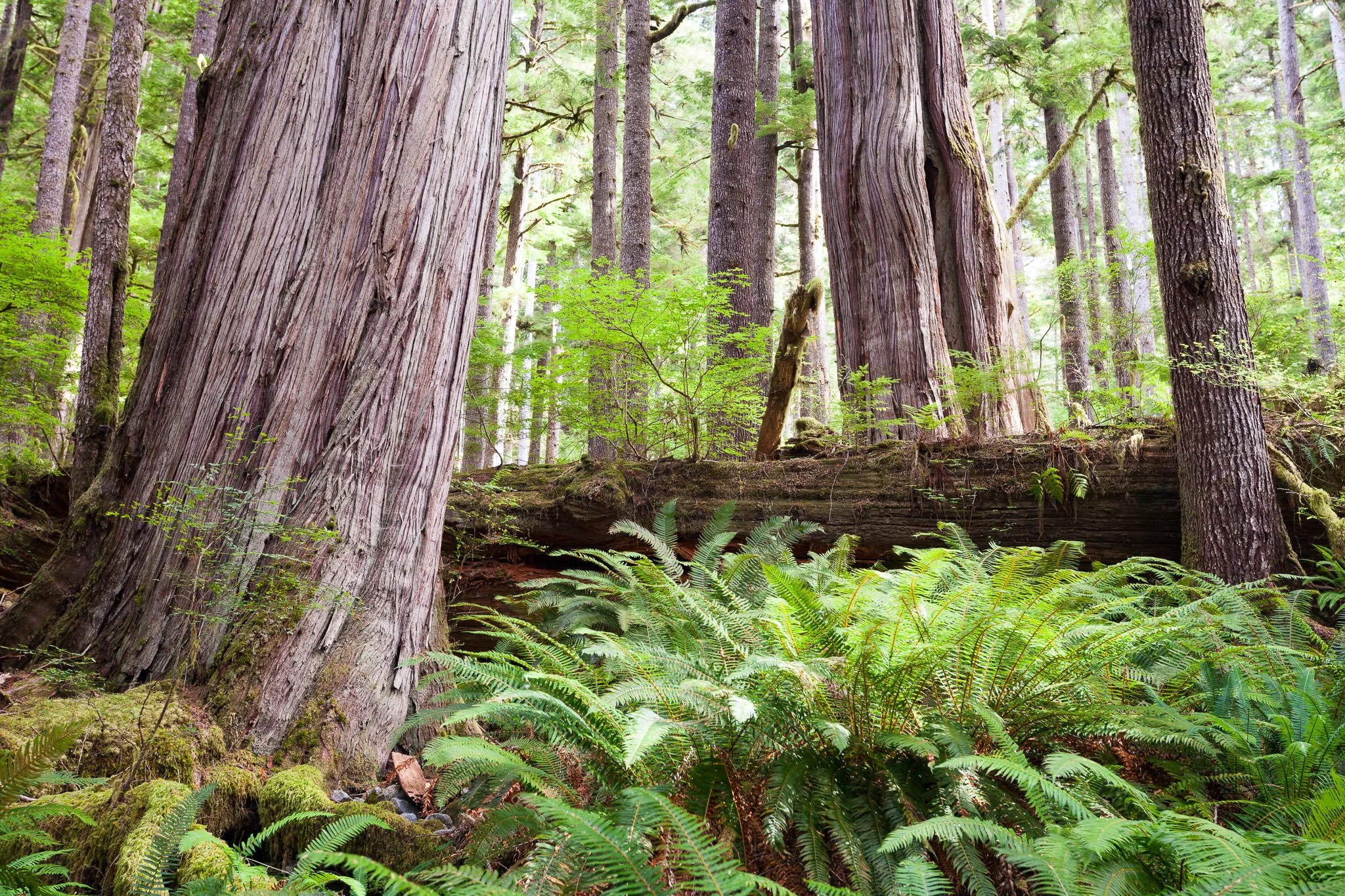
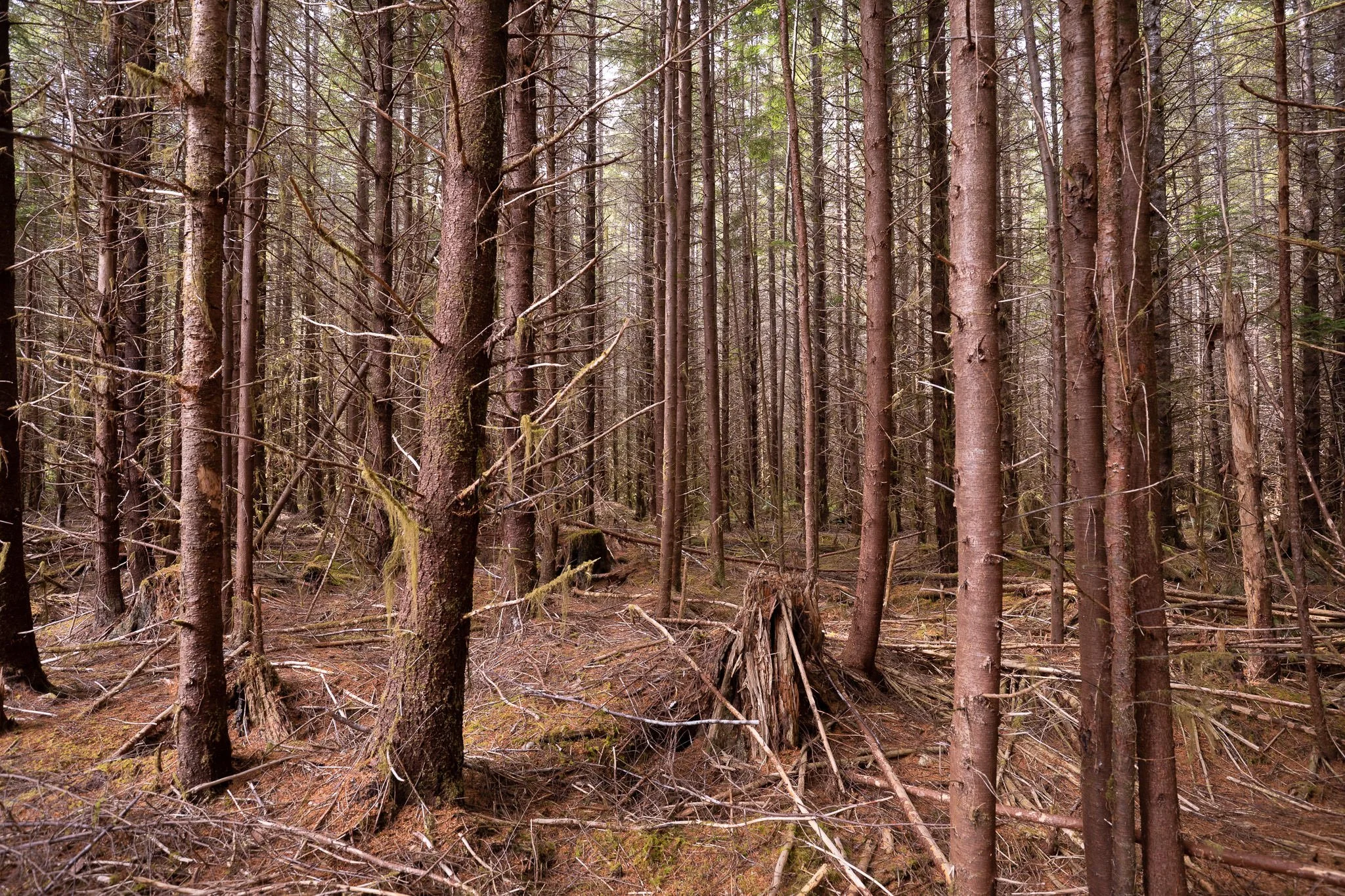
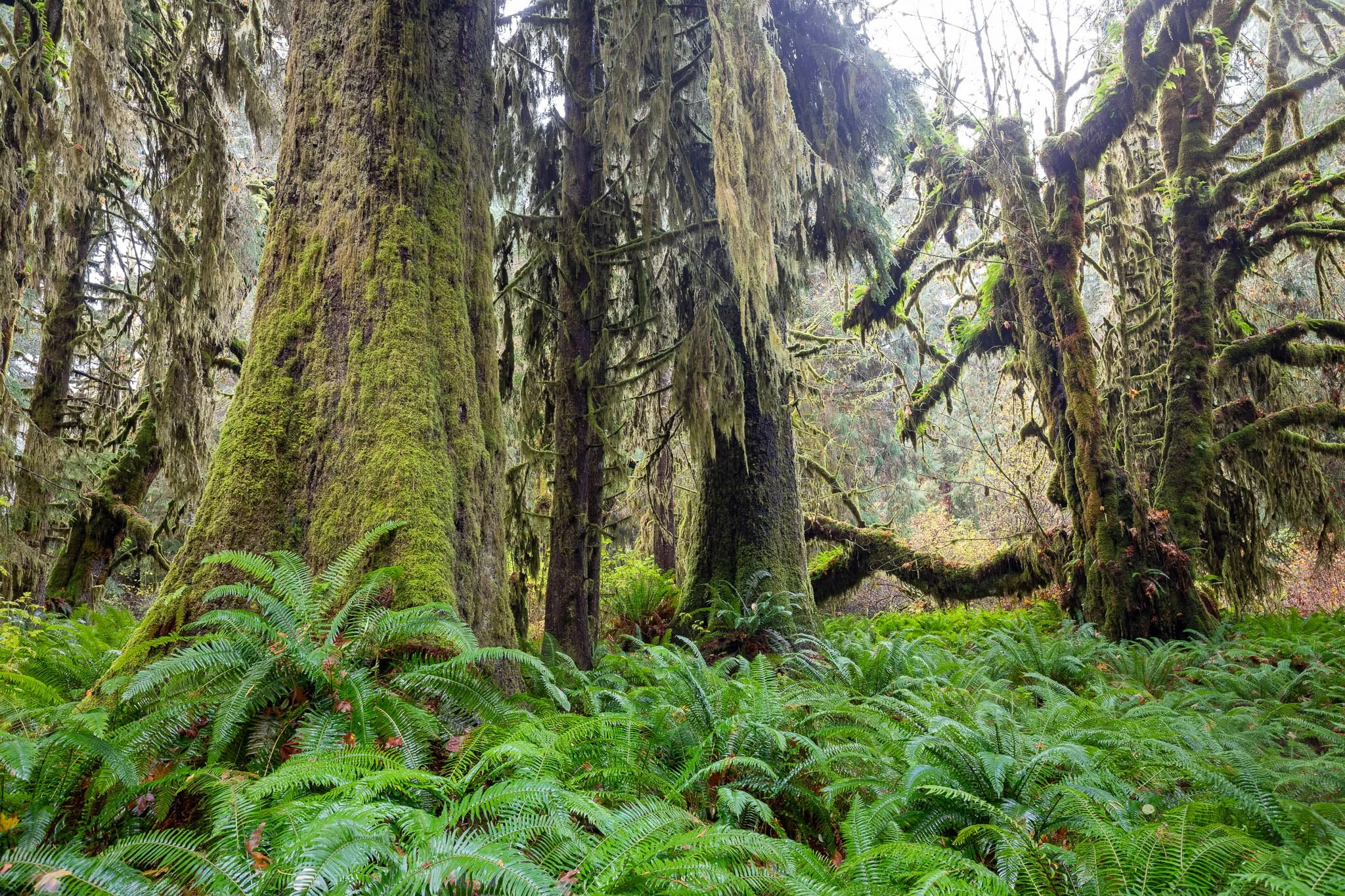
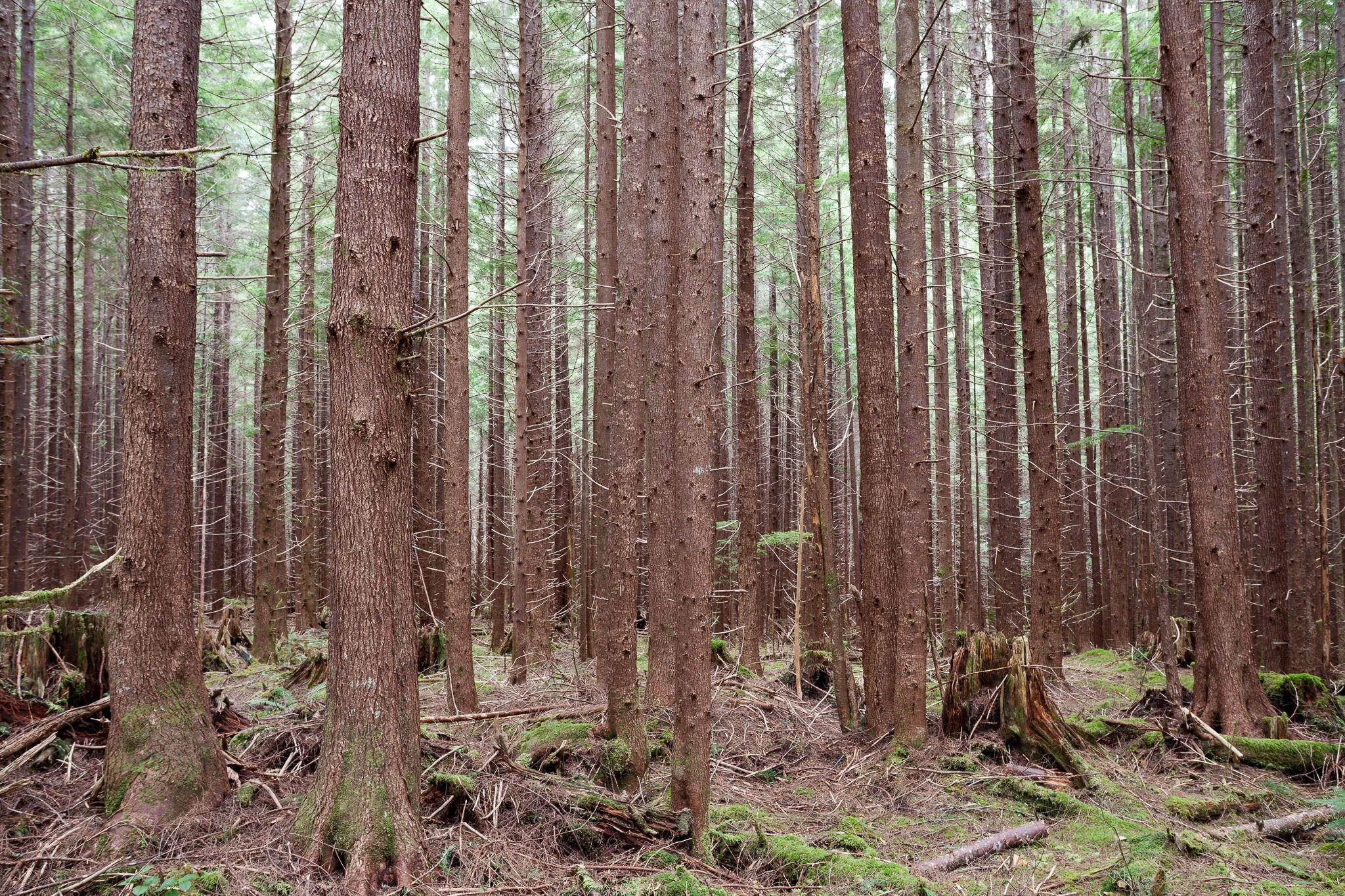
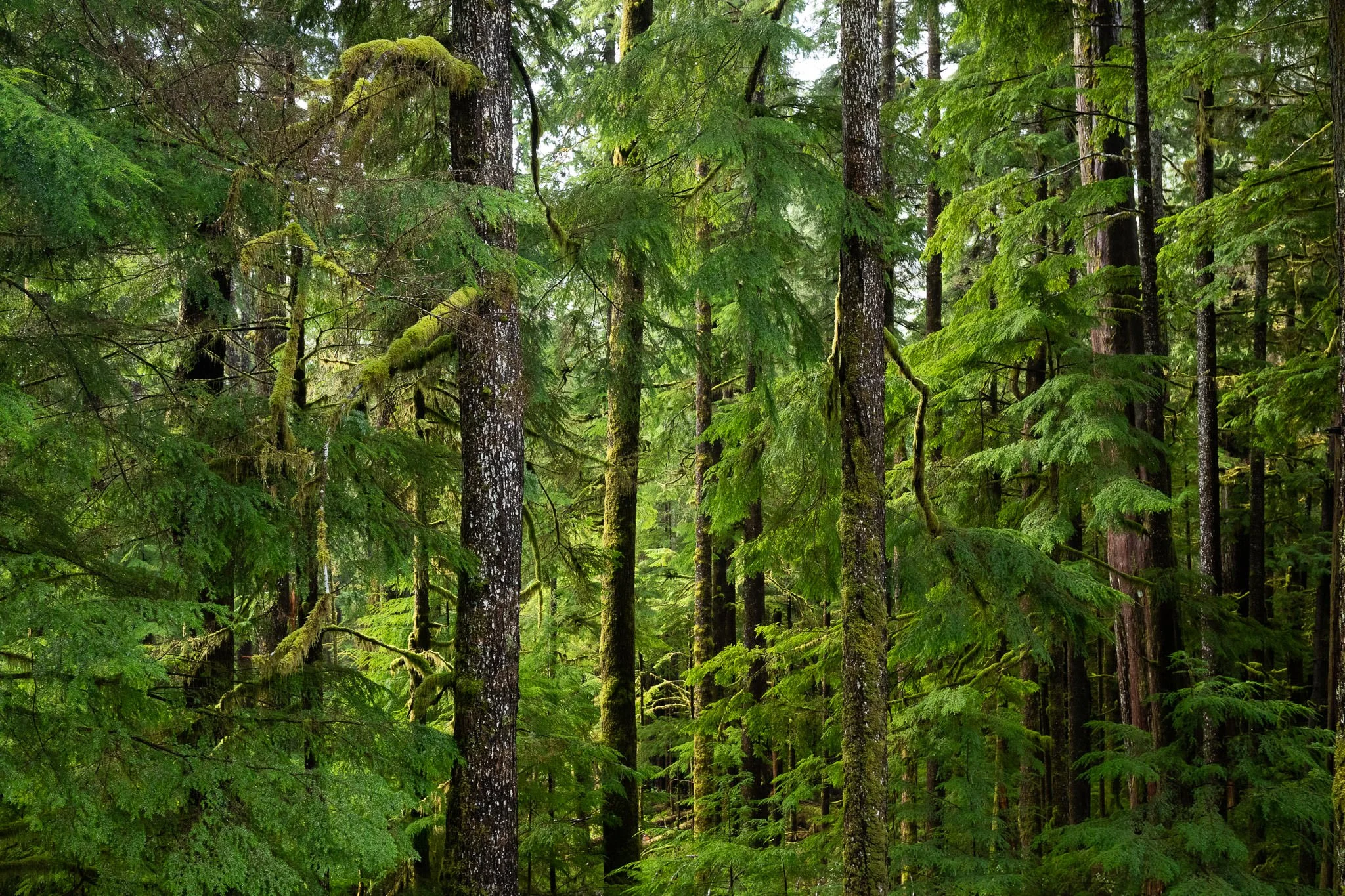
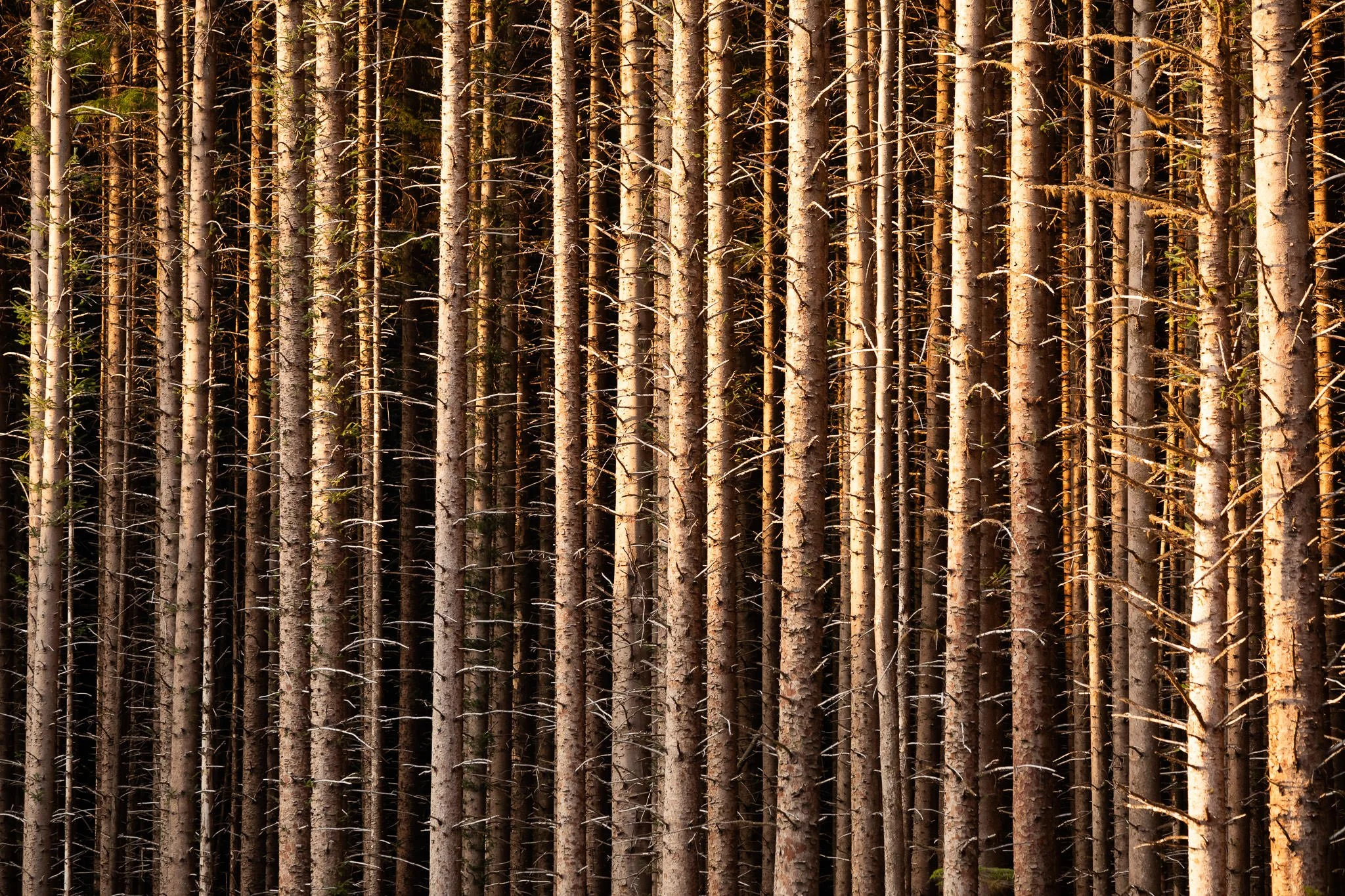
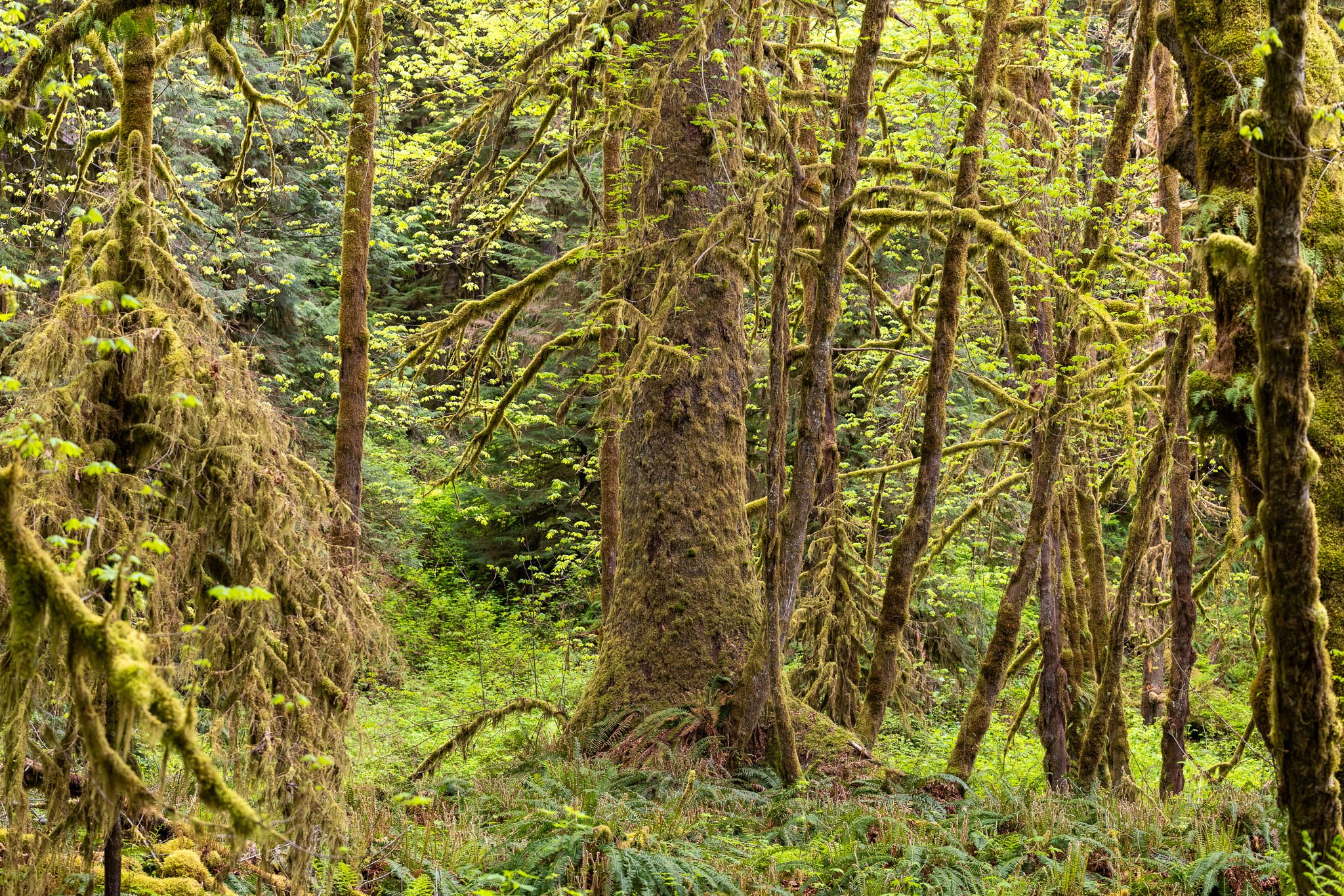
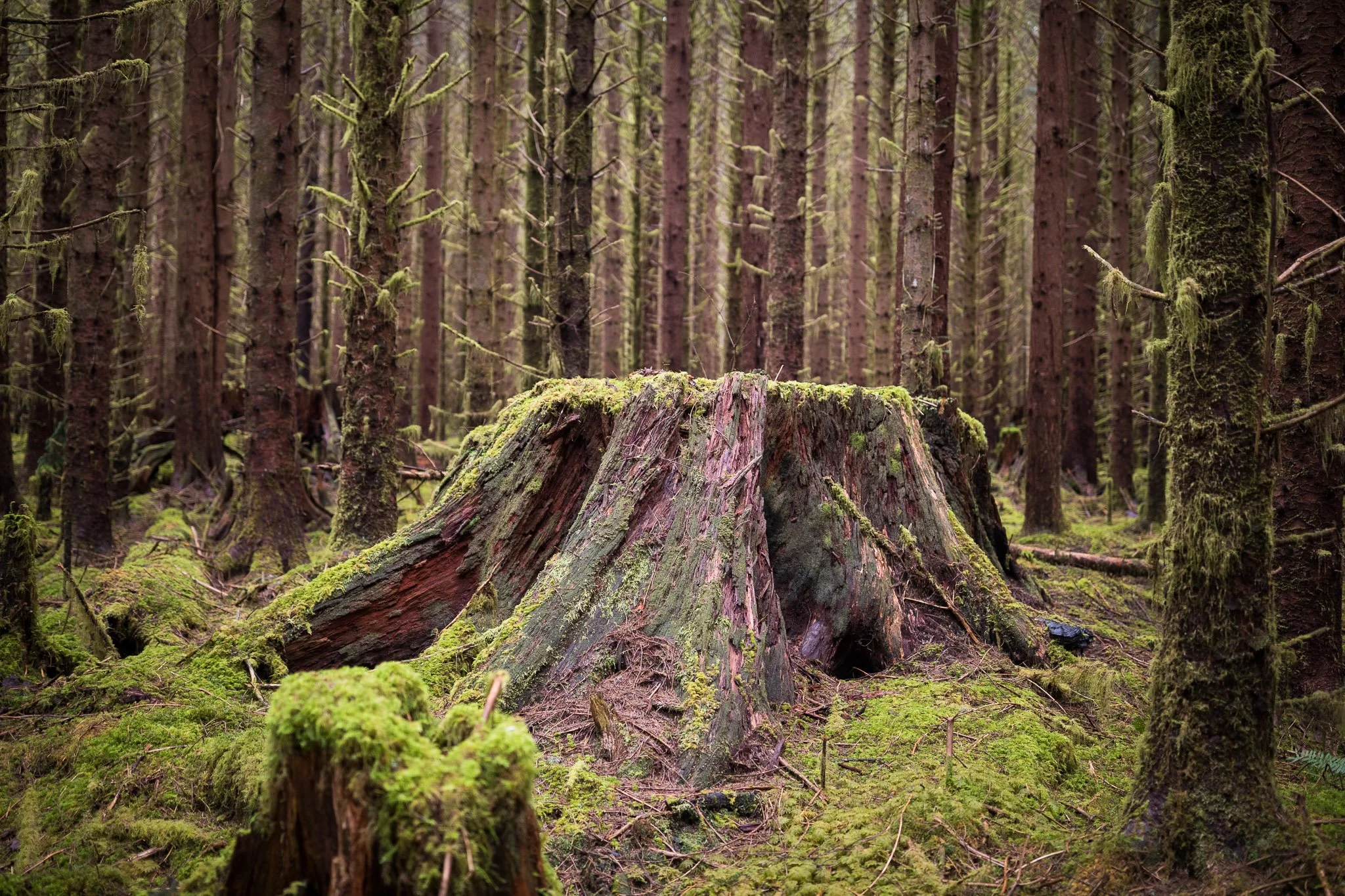
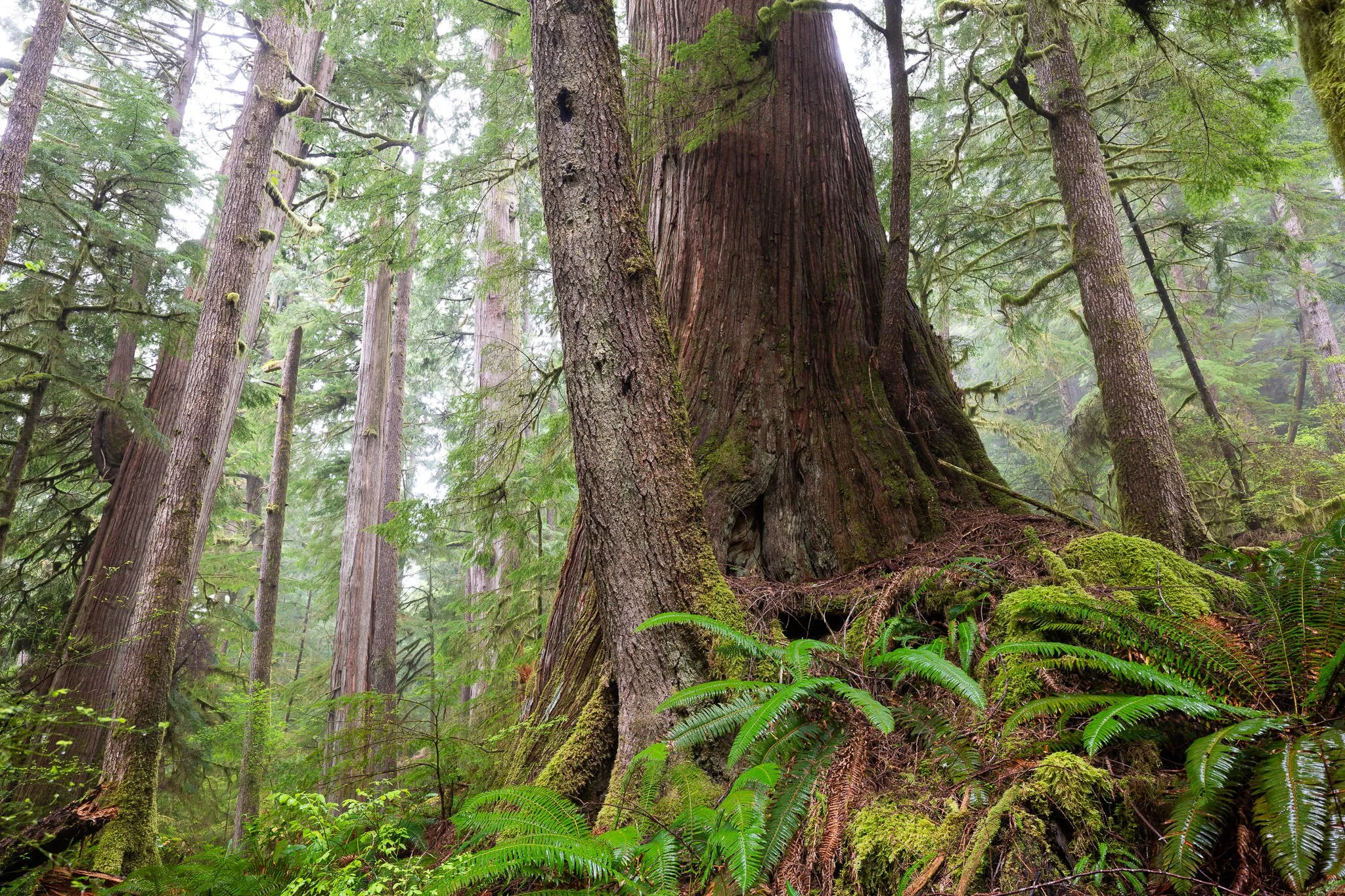
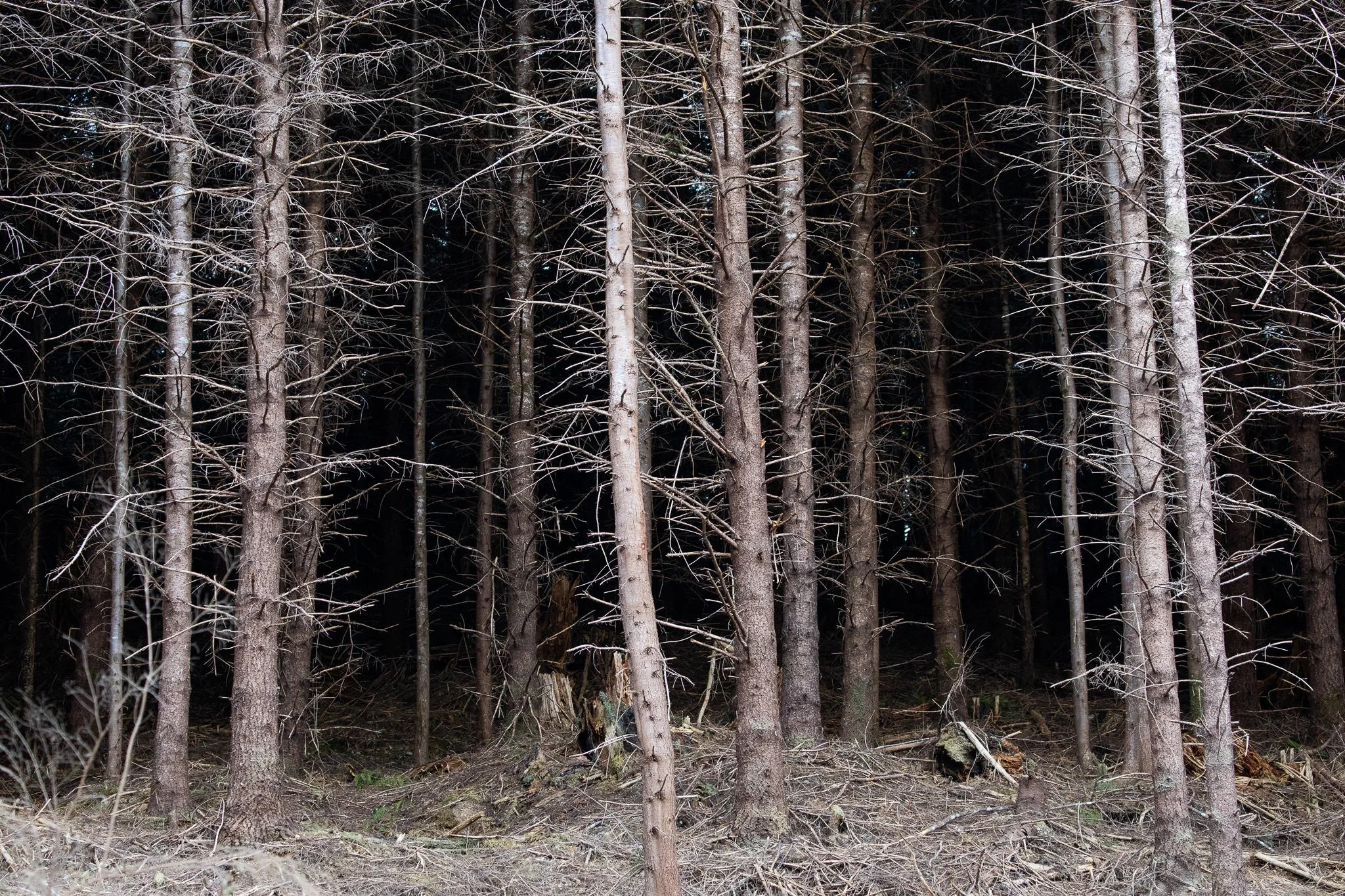
Swipe to spot the difference between old-growth and second-growth forests 👀🌲
Pretty easy, eh?
The secret ingredient in an old-growth forest is time. Old-growth forests in BC are highly complex ecosystems that have grown and evolved over centuries to millennia. They store vast amounts of carbon in the trunks of large trees and in their soils. They’re also home to a wide range of unique species, many of which depend on these forests for their very survival.
Second-growth tree plantations may look green on the outside but are often brown and barren on the inside, as their dense canopies shade out sunlight from the forest floor. These “tree farms” lack the structural diversity needed to support many of the species that depend on old-growth forests.
Old-growth forests are a non-renewable resource under BC’s current system of forestry, where second-growth forests are relogged on average every 50 years, never to become old-growth again.
This conversion is known as “forest degradation,” in which complex primary forests are replaced by simplified tree plantations that do not replicate the ecological values of ancient forests.
Beyond the environmental impacts, the loss of ancient forests contributes to generational amnesia, where each new generation inherits a world that’s different from the one before but comes to accept it as the new normal. Often, the only evidence of the once-grand forests that existed here are the monumental stumps hidden among the hillsides.
Today, after more than a century of industrial logging, we’ve lost over 80% of the productive old-growth forests on Vancouver Island and well over 90% of the valley bottoms where the biggest trees grow and the richest biodiversity is found.
We must ensure the remaining, irreplaceable, endangered ancient forests receive the protection they deserve.
Speak up!! Take action today: send an instant message to the BC government calling for old-growth protection.